
The story of Asenath
The story of Asenath is found in the final chapters of Genesis. While she is a relatively quiet figure in the text, her marriage represents a massive cultural and religious shift in the life of Joseph, the son of Jacob.
She is the bridge between the Hebrew patriarchs and the Egyptian empire.
1. The Egyptian Princess
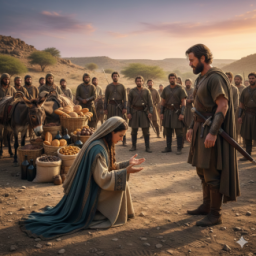
Asenath is introduced in Genesis 41:45. After Joseph successfully interpreted Pharaoh’s dreams and was promoted to Vizier (second-in-command of all Egypt), Pharaoh gave him an Egyptian name and an Egyptian wife (Asenath).
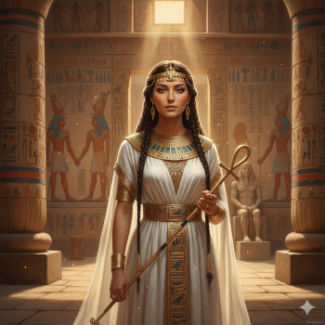
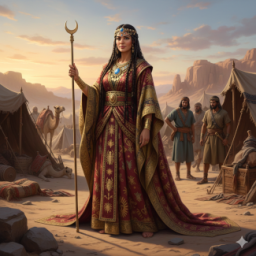
- Her Lineage: Asenath was the daughter of Poti-Pherah, the priest of On (also known as Heliopolis).
- Her Status: This was a marriage of extremely high status. The priests of On were the most learned and powerful religious elite in Egypt, and the city was a center for the worship of the sun god, Ra.
2. The Mother of Two Tribes
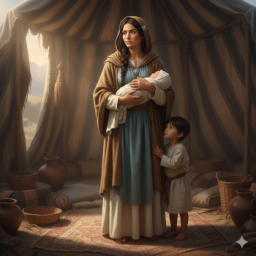
Asenath bore Joseph two sons during the “seven years of abundance” before the Great Famine hit. These two sons are vital to the history of Israel:
- Manasseh: His name means “God has made me forget all my trouble.”
- Ephraim: His name means “God has made me fruitful in the land of my suffering.”
When Jacob (Israel) was dying, he adopted Asenath’s two sons as his own, giving them the same status as his direct sons. This is why, in the list of the Twelve Tribes of Israel, there is no “Tribe of Joseph”—instead, there are the “Half-Tribes” of Manasseh and Ephraim.
3. The Legend of “Joseph and Asenath”
Because the Bible provides very few details about her personal life or her conversion from Egyptian paganism to Joseph’s faith, a famous ancient book was written called Joseph and Asenath (likely between 200 BCE and 200 CE). In this non-biblical but popular expansion:
- Asenath is described as a beautiful woman who initially rejects Joseph but later has a visionary experience with an angel.
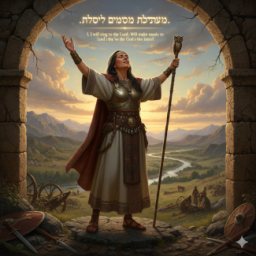
- She repents of her idolatry, destroys her idols, and embraces the God of Israel.
- This story was used by early Jewish and Christian communities to explain how a “foreigner” could become a matriarch of Israel.
Why Asenath’s Story is Significant
- Integration: She represents the period when the Israelites were integrated into Egyptian society before the later period of slavery.
- Matriarchal Status: Half of the northern kingdom of Israel (the “House of Joseph”) traced their biological maternal lineage back to her.
- A “Hidden” Transition: Her story mirrors that of Ruth—a woman from a different nation who joins the story of God’s people through marriage and family.
Father — Poti-Pherah (Priest of On)
Husband — Joseph (Son of Jacob)
Sons — Manasseh and Ephraim
Meaning of Name — Likely “Belonging to [the goddess] Neith”
Key Role — Matriarch of the two largest tribes in the Northern Kingdom
Asenath’s presence in the Bible ensures that the “blood of Egypt” was flowing through the veins of two of Israel’s most powerful tribes, reflecting God’s habit of including outsiders in the central story of redemption.