
The Story of Deborah
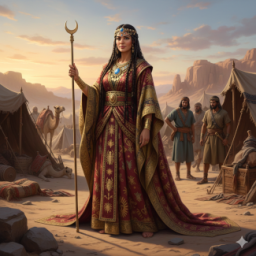
The story of Deborah is one of the most celebrated and unique in the Bible. She is the only woman among the twelve judges of Israel and is also distinguished as a prophetess and a “Mother in Israel.” Her leadership occurs during a time when Israel had been oppressed for 20 years by the Canaanite King Jabin and his powerful general, Sisera.
Her story is recorded in Judges 4 and 5.

1. The Prophetess Under the Palm
While most judges were known primarily as military warriors, Deborah was first recognized for her wisdom and spiritual authority. She held court under the Palm of Deborah in the hill country of Ephraim.
- The Role: Israelites from all over the country came to her to have their disputes settled.
- The Call: God gave Deborah a message for a man named Barak, commanding him to gather 10,000 men from the tribes of Naphtali and Zebulun to fight Sisera’s army and its 900 iron chariots.
2. The Condition of Barak
Barak was hesitant to face Sisera’s superior military technology (the iron chariots) alone. He told Deborah:
“If you go with me, I will go; but if you don’t go with me, I won’t go.” (Judges 4:8)
Deborah agreed to go, but she gave a prophetic warning: Because of his hesitation, the honor of the victory would not go to him but would instead be delivered into the “hand of a woman.”
3. The Battle at Mount Tabor
Deborah and Barak led their forces to Mount Tabor. As Sisera’s chariots approached the Kishon River, a massive storm broke out (described poetically in the Song of Deborah).
- The Miracle: The river overflowed, turning the ground into a swampy marsh. The heavy iron chariots—the “tanks” of the ancient world—became stuck in the mud, rendering them useless.
- The Rout: Barak’s foot soldiers descended from the mountain and decimated the Canaanite army. Sisera, seeing his forces destroyed, abandoned his chariot and fled on foot.
4. The Prophecy Fulfilled (Jael)
Sisera sought refuge in the tent of a woman named Jael, thinking her family was at peace with his king. Jael gave him milk and a place to rest. Once he was fast asleep, she took a tent peg and a hammer and drove the peg through his temple.
When Barak arrived in pursuit, Jael showed him the dead general. Just as Deborah had predicted, a woman—Jael—claimed the final glory of the victory.
5. The Song of Deborah (see below)
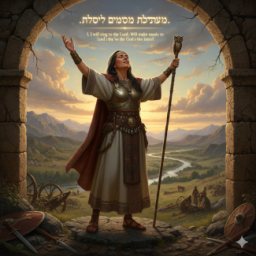
Judges 5 is an ancient poem known as the Song of Deborah. It is considered one of the oldest pieces of literature in the entire Bible. It celebrates the victory, praises the tribes that volunteered, and offers a vivid, rhythmic account of the battle and the bravery of Jael.
Why Deborah’s Story is Unique
- Her name: (Debōrāh) means “Bee,” symbolizing her industriousness and her “sting” against the enemies of Israel.
- Mother in Israel: She is the only figure given this title, reflecting her role as a protective, nurturing, and fierce leader of the nation.
- Only Female Judge: Her authority was total—legal, military, and spiritual—proving that in the biblical narrative, God’s call is not restricted by gender.
- The Result: Following the victory of Deborah and Barak, the Bible records that the land had rest for forty years.